Khamenei Is Dead. Nobody Knows Who Runs Iran Now.
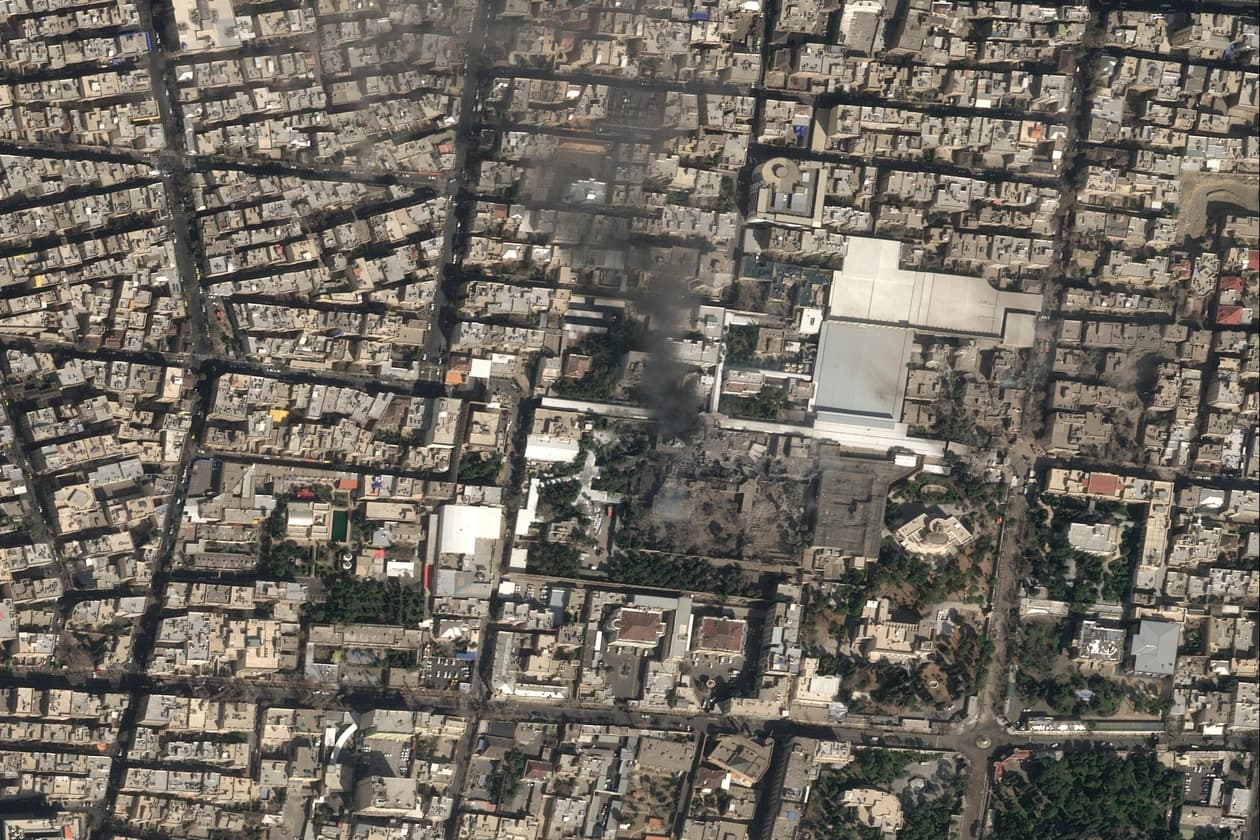
The Supreme Leader of the Islamic Republic of Iran was killed Saturday in a joint U.S.-Israeli airstrike that put approximately 30 bunker-buster munitions into his compound in Tehran's Pasteur district. Iranian state media confirmed it Sunday morning after hours of insisting he was safe. The broadcaster reportedly broke down in tears reading the announcement.
This is the most significant leadership decapitation in the Middle East since the U.S. killed Saddam's sons in 2003, and the strategic implications are arguably bigger. Khamenei wasn't just a figurehead. He was the gravitational center of the entire Iranian security state, the man who personally controlled the IRGC, the judiciary, state media, and the nuclear program for 36 years. And now he's gone, along with what appears to be a significant chunk of the senior leadership below him.
The problem with cutting the head off
Here is the thing that Washington and Jerusalem haven't publicly addressed yet: killing Khamenei is the easy part. The hard part is what fills the hole.
Iran's constitutional succession mechanism says the Assembly of Experts, a body of 88 senior clerics, is supposed to select a new supreme leader. But that process was designed for a natural death with orderly transition, not for a scenario where the leader and potentially dozens of other senior officials are killed simultaneously while the country is under active bombardment with 4% internet connectivity.
The names being circulated right now as potential successors tell you how confused the picture actually is. Mojtaba Khamenei, the supreme leader's son, has IRGC connections and has been groomed informally for years. But father-to-son succession is deeply unpopular in the Shia clerical establishment and he doesn't hold any formal religious credentials that would give him legitimacy. Reports indicate Israel specifically targeted Khamenei's sons in the strikes, though intelligence assessments suggest they survived.
Ali Larijani, the National Security Council secretary, is apparently the continuity-of-government figure Khamenei personally designated to manage a crisis like this. He's smart, even-tempered, and an ideologue, but he's not a cleric either, which matters in a theocracy. Larijani posted on X vowing Iran would deliver an “unforgettable lesson,” which suggests he's trying to assert authority. Whether anyone listens is another question.
Hashem Hosseini Bushehri is a senior cleric connected to the Assembly of Experts where he serves as first deputy chairman. He was close to Khamenei but has a low profile domestically and no known deep ties to the IRGC. In normal times he might be a consensus pick. These are not normal times.
The IRGC question
The CIA apparently warned before the strikes that killing Khamenei could result in direct IRGC military rule rather than democratic opening. That tracks with everything we know about how the Iranian power structure actually works.
The IRGC is not just a military organization. It's a parallel state. It has its own intelligence service, its own economic empire controlling massive chunks of the Iranian economy, its own foreign policy apparatus through the Quds Force, and its own ideological mission baked into its founding documents. The clerical establishment was always the top layer of authority, but the IRGC was the muscle that made everything work. Remove the clerics and the muscle is still there.
The question that matters for the next 72 hours and beyond is whether the IRGC fractures or consolidates. If it holds together, the most likely outcome is not a democratic Iran but a harder, more openly militarized regime. Think less “Arab Spring” and more “Egyptian military government.” The ideology gets quieter, the uniforms get louder, and the repressive capacity stays exactly the same or gets worse.
If the IRGC fractures, with different commanders in different regions making different calculations about whether to fight, negotiate, or defect, then you get something much messier. Regional power brokers, ethnic mobilization in Kurdistan and Baluchistan, potential civil conflict, and a country of 90 million people with degraded infrastructure, no internet, and a collapsed currency splitting apart along fault lines that have been suppressed for decades.
The proxy network problem
Iran's proxy architecture is the other variable nobody can predict right now. Hezbollah, Kataib Hezbollah, the Houthis, various Iraqi PMF factions. These organizations exist because of decades of Iranian investment through the IRGC Quds Force. But the degree of control Tehran exercises over each group varies enormously.
Hezbollah in Lebanon has historically been the most capable and most autonomous. They have their own revenue streams, their own political apparatus, their own operational planning. But Israel has been systematically degrading them for two years. Leadership decapitated, southern Lebanon infrastructure destroyed, advanced weapons stockpiles hit. The Lebanese government in Beirut has been making noise about reasserting sovereignty and disarming Hezbollah under the 2024 ceasefire. Reports indicate that IRGC officers are now directly overseeing Hezbollah operations rather than the traditional Lebanese leadership, which tells you how depleted the bench is.
Hezbollah's statement Saturday condemned the strikes but the language was notably measured. They called it a violation of international law and expressed solidarity but stopped short of declaring they would open a northern front against Israel. The domestic constraints are real. Lebanon's government has explicitly stated it doesn't need Hezbollah to defend Lebanese sovereignty, which is a remarkable sentence that would have been unthinkable two years ago.
Kataib Hezbollah in Iraq is a more immediate concern for Americans in the region. They've already threatened imminent attacks on U.S. bases and drone interceptions near Erbil have been confirmed. Their leader reaffirmed support for Iran and warned of total war. Whether that's posturing or a genuine activation order is unclear, but the capability is real enough that U.S. force protection in Iraq should be operating at the highest threat level.
What comes next
Trump told Axios he has several “off ramps” and could end operations in two to three days or “go long and take over the whole thing.” That ambiguity is probably intentional but it makes predictions about the next phase nearly impossible.
What we can say is this: the Iranian regime as it existed on Friday is gone. Whether what replaces it is better or worse for regional stability depends entirely on whether the coercive institutions fracture or consolidate, whether the protest movement that already had 100+ cities mobilized before the strikes can seize the moment, and whether the international community has any plan beyond bombing for what a post-Khamenei Iran actually looks like.
The Iraq and Libya precedents are not encouraging. But Iran is not Iraq or Libya either. It has a 3,000-year civilizational identity, a massive educated diaspora, an organized opposition movement that was already in the streets before any bombs fell, and a younger generation that despises the theocracy.
None of that guarantees anything. But it means the outcome is genuinely uncertain, which in this business is about the most honest assessment you can give.
Follow us for continued coverage.
Got SOF? Intel Desk provides threat assessments and security analysis from operators in the field.