Operation Epic Fury: What Expats, Executives and Contractors in the Gulf Need to Know Right Now
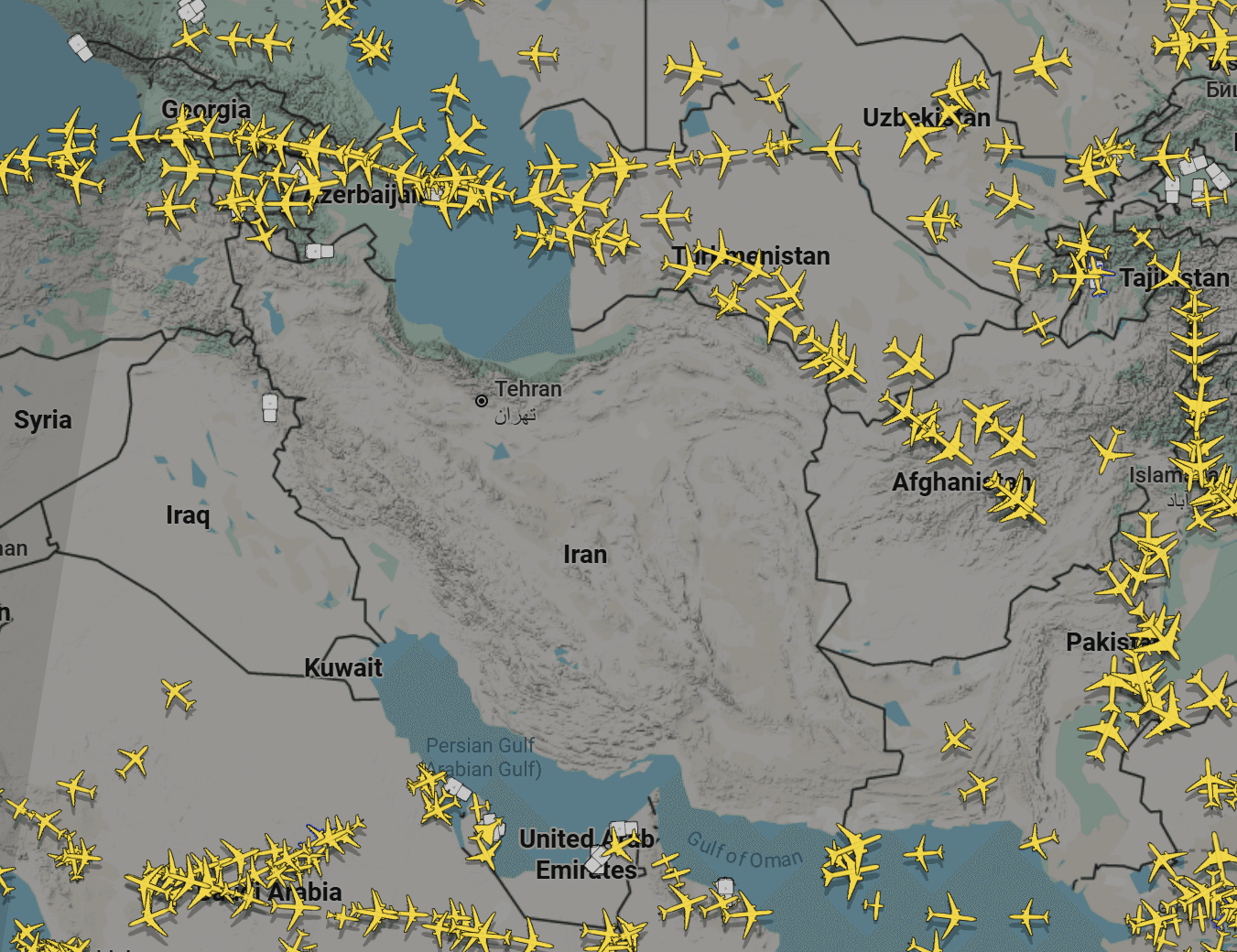
If you're reading this from Dubai, Doha, Manama, or Kuwait City, you already know the situation is bad. But you probably don't know how bad, because the information coming out right now is fragmented and half of it is wrong. Here's what we can confirm as of Saturday evening.
The airspace is gone
Every major commercial airport in the Gulf is either shut down or operating on emergency-only status. Dubai International, the busiest international airport on the planet, is closed indefinitely. DWC is closed. Hamad International in Doha is closed. Abu Dhabi, closed. Kuwait, closed. The UAE's General Civil Aviation Authority shut down the entire national airspace at 1300 local time as a precautionary measure and there is no timeline for reopening.
Emirates suspended all flights until at least 1500 Sunday. Qatar Airways cancelled everything until further notice. Turkish Airlines pulled out of the entire region through at least March 2 for some destinations. Etihad killed all departures until Sunday afternoon and said expect further extensions.
That means if you are currently in the Gulf and you were planning to fly out, you cannot. Not tonight, probably not tomorrow, and possibly not for several days depending on how the retaliatory strikes evolve.
What is actually happening militarily
The United States and Israel launched joint strikes against Iran early Saturday morning under what the Pentagon is calling Operation Epic Fury and Israel is calling Operation Roaring Lion. The strikes hit Tehran, Isfahan, Qom, Karaj, Kermanshah, and Tabriz. Targets included the Ministry of Intelligence, Ministry of Defense, IRGC command nodes, Atomic Energy Organization facilities, and the supreme leader's residential compound.
Khamenei is confirmed dead. Iranian state media acknowledged it Sunday morning after hours of denial. His compound took roughly 30 bunker busters. Multiple senior regime figures are also reported killed including the IRGC commander, defense minister, and intelligence chief, though some of those reports remain unconfirmed.
Iran responded with what they are calling an unprecedented multi-axis retaliatory offensive. Ballistic missiles and Shahed-type drones have been fired at Israel and at every major U.S. military installation in the region. That includes Al Udeid Air Base in Qatar, Ali Al-Salem in Kuwait, Al Dhafra in the UAE, NSA Bahrain, and Muwaffaq Salti in Jordan. This is not theoretical. Patriot batteries have been actively engaging inbound missiles over Doha. Debris from intercepts hit a residential area in Abu Dhabi and killed at least one civilian. A concourse at DXB airport was reportedly struck.
The IRGC has declared all U.S. and Israeli assets in the region as legitimate targets. They have stated there are no red lines.
What this means if you're on the ground
If you are an American citizen, the U.S. Embassy in Qatar and the U.S. Mission in the UAE have both issued shelter-in-place orders. The UK issued similar guidance. DoD authorized voluntary departure of military dependents from Bahrain but then paused the flights because there are no flights.
The practical situation for expats and executives right now is this: you are sheltering in place in a region where Iranian ballistic missiles are actively impacting, commercial aviation has ceased, and your embassy is telling you to stay indoors. The grocery stores in Tehran are already bare and that kind of panic buying will spread to Gulf cities if this goes on more than 48 hours.
If you have the means to get out overland to Oman or Saudi Arabia, those borders remain theoretically open but expect massive congestion and confusion at checkpoints. Oman is the most stable corridor right now because they've positioned themselves as a neutral mediator throughout this crisis. Saudi airspace appears to still be partially operational but the situation is fluid.
Who is most at risk
People with visible connections to U.S. or Israeli interests are in the most precarious position. That means defense contractors, consultants working with Gulf militaries on U.S.-origin systems, employees of American firms with offices near military installations, and anyone whose daily pattern puts them in proximity to the bases being targeted.
But honestly, the debris field from missile intercepts does not discriminate. The Abu Dhabi fatality was a Pakistani national who was nowhere near a military target. Intercept debris fell across Doha suburbs causing panic. This is an area-effect problem, not a precision problem.
The secondary risk that nobody is talking about yet is what happens when Iranian proxy groups in Iraq decide to activate. Kataib Hezbollah has already threatened imminent attacks on U.S. bases following strikes on PMF fighters south of Baghdad. If you are in Erbil or anywhere in the Kurdistan region, that threat is real and immediate. Drone interceptions have already been confirmed near Erbil.
What you should be doing right now
Stay away from windows. Stay away from military installations and government buildings. If you haven't already, fill bathtubs and every container you own with water. Charge every device. Download offline maps. Have your passport and critical documents in a go-bag at your door.
If you're running a team or a family and you've already decided you need to get out, the commercial options are gone for now. The people who will get out of the Gulf in the next 72 hours are people with access to private aviation, maritime options, or overland corridors with proper security and logistics support. That is the reality of the situation.
We've been doing this for a long time. If you need to move, reach out. We'll tell you straight whether we can help or not.
Need to move?
Got SOF? connects you with vetted special operations professionals for evacuation, extraction, and crisis response in the Gulf region.